.png)
.png)
.png)
.png)
.png)
Beyond Aesthetics: How Microneedling Supports Physical Health and Recovery
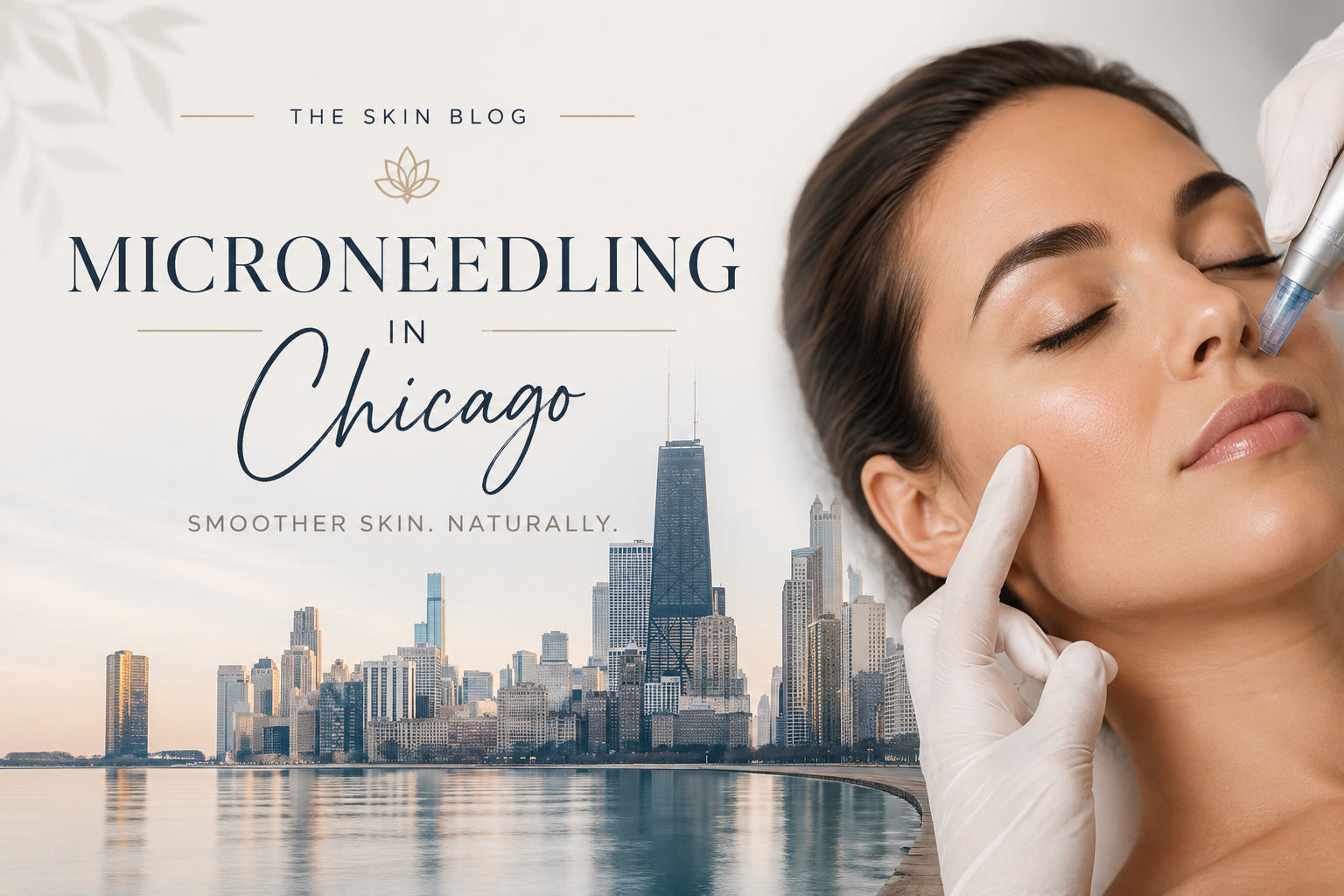
When most people hear "microneedling," they picture a skincare treatment for fine lines and glow. That's true, but it's only half the story. Beneath the cosmetic surface, microneedling is a powerful tool for physical recovery: helping scars heal, softening stretch marks, restoring hair, and even improving circulation in injured tissue.
At Chicago Integrated Health, microneedling is part of how we approach the whole body — not just how skin looks, but how it heals. Here's what microneedling can actually do for your physical health, who benefits most, and what to expect from a session in downtown Chicago.
What microneedling actually does to your body
Microneedling, also called collagen induction therapy, uses a device with very fine, sterile needles to create thousands of microscopic channels in the upper layers of your skin. These tiny "controlled injuries" sound counterintuitive — but they trigger your body's natural wound-healing cascade
- Inflammation phase (minutes to hours) — blood flow increases to the treated area, delivering immune cells and growth factors.
- Proliferation phase (days to weeks) — your skin produces new collagen, elastin, and new capillaries.
- Remodeling phase (weeks to months) — the new tissue strengthens and reorganizes, replacing damaged or scarred tissue with healthier structure.
This is why microneedling isn't a "surface" treatment. It works at the dermal level — the same depth where scars, stretch marks, and other physical concerns live.
5 physical health benefits of microneedling that aren't just cosmetic
1. Scar reduction from surgery, injury, and acne
Surgical scars, traumatic scars, and deep acne scars all share a common problem: disorganized collagen. The body laid down repair tissue too fast or too thick, and the result is a raised, depressed, or discolored mark. Microneedling breaks up that disorganized tissue and signals the body to lay down new, healthier collagen in its place.
Most patients see meaningful improvement after 3 to 6 sessions spaced 4-6 weeks apart, though results depend on scar age and depth. Older scars take more sessions; recent surgical scars (typically treated after the wound has fully closed, around 6-8 weeks post-op) often respond faster.
2. Stretch mark improvement
Stretch marks — whether from pregnancy, rapid weight change, growth spurts, or fitness — are essentially scars in deeper layers of skin. Topical creams generally can't reach where stretch marks live; microneedling can. By stimulating collagen production in the dermis, microneedling can soften the appearance and texture of stretch marks over time, especially on the abdomen, thighs, hips, and arms.
3. Hair restoration for thinning hair
This one surprises people. Microneedling on the scalp — often combined with PRP (platelet-rich plasma) — has clinical evidence supporting its use for androgenetic alopecia (pattern hair loss). The mechanism: microneedling improves blood flow to follicles, activates dormant stem cells in the scalp, and increases absorption of topical hair-growth treatments like minoxidil.
If you've been losing hair and wondering whether there's something between over-the-counter treatments and a surgical hair transplant, microneedling sits squarely in that middle ground.
4. Hyperpigmentation from past injuries
Burns, deep cuts, and post-inflammatory marks often leave behind hyperpigmentation — discolored patches that can linger for years. Microneedling helps even out skin tone by triggering controlled cell turnover and allowing topical brightening agents to penetrate where they need to.
5. Improved local circulation
Beyond the cosmetic side, the vascular changes microneedling triggers — increased capillary density and improved local circulation — can support tissue health in areas that have been chronically injured or stiff. This is part of why integrative practices like ours sometimes combine microneedling with other modalities like chiropractic care or physical therapy for patients recovering from injury.
Microneedling vs. LaseMD Ultra: which one and when
A common question: how does microneedling compare to laser treatments like LaseMD Ultra?
FactorMicroneedlingLaseMD UltraMechanismMechanical micro-injury via needlesFractional laser energyBest forScars, stretch marks, deep texture, hair restorationPigmentation, sun damage, fine lines, surface textureDowntime24-48 hours (redness, mild swelling)Same-day or next-daySkin tonesSafe for all skin tonesBest for most skin tones with proper settingsAnnual frequencyYear-roundYear-round (excellent post-summer for sun damage)
Many patients combine both treatments throughout the year — microneedling in the "off-season" and laser as needed for specific pigment concerns. We'll guide you through which makes sense based on your goals.
What to expect at your microneedling appointment in downtown Chicago
Sessions at our 30 S Michigan Avenue location typically run 60-75 minutes:
- Consultation and skin assessment (10 min) — we evaluate the treatment area and confirm you're a good candidate.
- Topical numbing (20-25 min) — applied to the treatment area so the procedure is comfortable.
- Treatment (20-30 min) — the device passes over the skin in sections. Most patients describe the sensation as a vibrating massage with occasional tingling.
- Soothing serums and SPF (5-10 min) — applied immediately after to support healing.
The next 48 hours: expect redness similar to a mild sunburn, possible slight swelling, and a sensation of tightness. Most patients return to work the next day with minimal makeup. Avoid intense exercise, direct sun, and active skincare (retinol, AHAs) for 5-7 days.
Results timeline: you'll see initial brightness within a week. Real collagen-driven changes show up between weeks 4 and 12, with continued improvement over 6 months.
When microneedling fits into a recovery plan
For patients dealing with post-surgical scarring, post-injury healing, or persistent skin changes after physical trauma, microneedling can be part of a broader recovery approach. We often see best outcomes when it's coordinated with other care — for example, post-surgical patients also working with a physical therapist to restore mobility, or chronic pain patients combining microneedling for old injury scars with chiropractic adjustment and massage.
You don't have to coordinate this care across multiple offices. That integration is the entire point of our practice — chiropractic, physical therapy, regenerative medicine, and aesthetic services under one roof on Michigan Avenue.
Is microneedling right for you?
Microneedling is a fit for most healthy adults, but it's not for everyone. Skip it if you have:
- Active acne or skin infection in the treatment area
- Active eczema, psoriasis, or rosacea flares
- Bleeding disorders or current anticoagulant therapy
- Recent radiation, chemotherapy, or accutane (within the last 6 months)
- Pregnancy (most providers wait until postpartum)
- A history of keloid scarring
In your consultation, we'll review medications, conditions, and goals to confirm it's right for you. Book a consultation in Chicago to get a personalized plan, or contact us with questions.
Frequently asked questions
Is microneedling safe?
Yes, when performed by trained, licensed providers using sterile, single-use cartridges. Microneedling is FDA-cleared for certain applications and has decades of clinical research supporting its safety profile. Risks (infection, hyperpigmentation in some skin tones, prolonged redness) are rare with proper technique and aftercare.
How many microneedling sessions will I need?
For general skin concerns, 3-4 sessions spaced 4-6 weeks apart. For deeper scars or stretch marks, plan for 6 sessions or more. Hair restoration protocols typically run 6-10 sessions spaced 3-4 weeks apart. Your provider will tailor a plan in your consultation.
Does microneedling hurt?
With proper topical numbing applied 20-25 minutes before the procedure, most patients describe the sensation as a vibrating massage with mild tingling, rather than pain. Sensitive areas (bony areas, around the eyes) can feel more intense. Tell your provider during treatment if anything is uncomfortable — they can adjust depth and speed.
How long is recovery after microneedling?
Most people are back to normal activity the next day. Visible redness typically fades within 24-48 hours. Avoid the gym, saunas, hot tubs, sun exposure, and harsh actives for 5-7 days. Wear SPF 30+ daily during recovery — this is non-negotiable for protecting healing skin.
Can microneedling really help with scars from injuries or surgery?
Yes. Clinical research supports microneedling for atrophic acne scars, post-surgical scars, traumatic scars, and burn scars. Results vary by scar age, depth, and skin type — but for many patients, 3-6 sessions produce meaningful improvement that doesn't fade because the underlying collagen has actually been remodeled.
Is microneedling FDA-approved?
Microneedling devices are FDA-cleared (not "approved," which is a different regulatory pathway) for specific indications including facial scarring and certain skin conditions. The device we use is FDA-cleared and operated only by trained providers.
Where can I get microneedling in Chicago?
We offer microneedling at our downtown Chicago location: Chicago Integrated Health, 30 S Michigan Ave, Suite 400. You can also visit our Lake Forest office. Schedule a consultation to discuss your goals.
Read More Blogs!
Stay updated with the latest blog posts and engage with our community.